
The Five Secrets of Effective Stepparenting
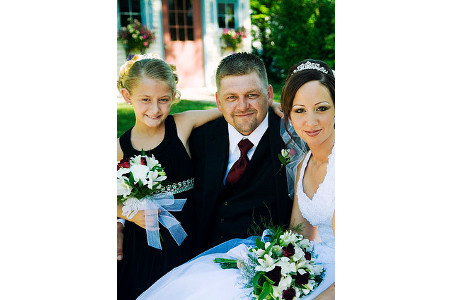
Parenting is never easy, but when you have a blended family-with bio-kids and stepkids, your spouse's ex, and other extended family members thrown into the mix-things can get very difficult very quickly. We receive questions every week in Empowering Parents from readers who ask: "How can I discipline my stepkids effectively and get their respect? No matter what I do, they just won't listen to me." Carri and Gordon Taylor, nationally recognized experts on creating thriving stepfamilies, have answers that have worked for countless stepparents.
It can be extremely hard to find the right balance when you're a stepparent. Many adults try to blend their families with high expectations: they may think it will be similar to their first marriage in terms of time spent with their spouse and the attention they'll be able to give the relationship. Unfortunately, this couldn't be further from the truth.
We like to say that first marriages are "apples" and second marriages are "oranges": you can't compare the two, because while a first marriage is all about your new partner, a subsequent marriage revolves around the kids-and making sure that everyone has a place in the family. In working with stepfamilies over the years, we've found if the parents try to rush it or "force new family," it's not going to work out well. And here's the tough part for adults: the steprelationship is the barometer of how (or if) the family is coming together-and the child is the one who will determine that, because you can't make anyone like you.
It's important to realize that everyone's role shifts when you create a stepfamily. In fact, when you first bring everyone together, all the kids will try to figure out where-or even if-they belong in the new system. If they don't believe they have a place-or if they think someone is taking their place-they'll often act out. We've come up with five tried-and-true "secrets" that helped us after we created our own stepfamily. We've also used them to help thousands of other couples successfully blend theirs. (Read to the end for the "bonus secret" that we think every stepparent should know!)
Surprised? It's true. As a stepparent, it's important to defer to the bio-parent. Even though this might go against everything you expected, the steprelationship needs time to develop. It's important not to be the heavy, but you can't disappear either. Maintaining your presence and at the same time supporting the bio-parent is difficult, but will be productive. The irony is that when you relax and support the bio-parent, the relationship with your stepchild will form faster.
You're the good cop; let the bio-parent be the bad cop. If there's a behavior for which your stepchild needs a consequence, let your spouse deal with it and support their decision. The good cop finds out the interests of the stepchild and develops the relationship by getting involved in the child's life based on those discoveries.
Don't compete with your counterpart; rather, uphold them. In other words, don't try to be a better mom than your stepkids' bio-mom, or a better dad than their bio-dad. No matter what you think of the bio-parent's style of discipline (or lack thereof) it's important to respect and acknowledge the strength of the biological connection. This can be difficult to do when your new spouse is still at war with his or her ex, and possibly still fighting over the kids and other issues.
Many stepmoms decide they're going to make up for all the hurt and pain. Many stepfathers have an attitude of "I'm going to shape up this platoon and lead the troops out of the wilderness." But as somebody once said, "If the stepdad is leading and no one is following, he's just out for a walk." We encourage stepparents to establish a relationship with their stepkids rather than being a dictator or rigid authoritarian. Simply be present in the child's life and avoid "fixing things or competing with the bio-parent.
Discover the things your stepson or stepdaughter likes. Start off as you would with any friendship: find some common ground and do things together that you might both enjoy. Remember, you're just there to build a relationship appropriately, not to parent or take the place of your stepchild's mother or father. Come in as a friend or a benevolent aunt or uncle; in other words, choose a role other than "parent" in order to foster the relationship.
Let your spouse have one-on-one time with his or her kids-without you. This helps reduce the displacement and loss the child might be feeling, and assures him that he hasn't been displaced by somebody else. This flies in the face of the myth of "instant family." In our own stepfamily, we always encouraged each other to go off for the weekend or do special things with our bio-kids solo, and it helped everyone immeasurably. In all blended families, this reassures the children that they still belong and haven't lost the love of their bio-parent to the new spouse.
One of the most common complaints of biological parents is that they believe they're caught in the middle. We often hear, ?I love my spouse and I love my children, but I feel like I'm being pulled apart.? Many stepparents get all sick and nervous if their spouse is still spending time with his or her kids and not including them. Our advice to them is, "Well, if you plan to be in this marriage awhile, don't worry about it-you'll get your turn." In the meantime, this relieves the bio-parent and releases them to enjoy their children- and lets the stepkids know you're not there to take their parent away.
We hear this all the time: "I feel guilty because I don't love my stepkids." The reality is that you may never love them as your own-or even like them. And remember, you can't make your stepkids like you, either! You are the "intruder." In their minds, you've displaced them. But even if you don't like them, you can learn to act lovingly toward them. Love is an action; so behave in a loving manner toward your stepkids. It may surprise you down the road; as the relationship develops, love just may develop!
It's important to realize that because of the pain kids experience after divorce-and continue to feel with a remarriage-they may act out. They may not have the skills to talk it out and express what's really going on inside. Many couples will come in for counseling and in essence say, "Fix these kids." Yet the kids aren't broken-the family is. So we ask the adults if they are willing to acknowledge the pain and brokenness that they created. If the couple is able to gain the skills to listen and understand what the child is going through, over time, the kids will usually respond productively.
Find something good about your stepkids. Instead of focusing on the negative or complaining about them, find something positive to say to your spouse. That gets your husband or wife out of the middle, and puts you in a more positive frame of mind about the kids.
Here's the analogy we like to use with the stepparents we see: The stepfamily relationship is a "baby relationship": it's brand new and very weak. In essence, it's like you're trying to pull a Mack truck with a piece of string. And if you pull too hard or discipline too rigidly, you'll just pop the string. So take the time to develop the relationship, making the string into a cord, the cord into a rope, and the rope into a chain. The chain you end up with some day will be strong enough to take all the pushes and pulls of normal relationships. (And by the way, we are talking about years-not days, weeks, or months!)
We understand that these "5 Secrets of Effective Stepparenting" are not always easy to follow, but over the years, we've seen fabulous things happen in stepfamilies when they do it right. And it's happened in our own family-we've been able to develop some wonderful relationships with our stepkids by sticking to these principles. Just remember that it takes a lot of time, perseverance, maturity, commitment and patience on the part of all the adults involved.
by Carri and Gordon Taylor