
Thumbsucking
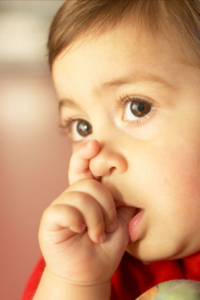
A child's need to suck on the breast or bottle is a survival behavior. Thumbsucking may increase when breast or bottle feeding decrease. It does not always indicate that a child is insecure, anxious, or unhappy. Thumbsucking is a natural reflex. It is a way of self-soothing and self-comforting and may induce sleep.
The ADA recommends that children should stop sucking thumbs by the time their permanent teeth come in, about the age of 4 or 5. But, most kids stop sucking on their own between the ages of 2-4 years. In addition, whether a child's teeth are affected by thumb sucking depends on the type of sucking they do. More aggressive sucking may have a greater affect on the development of permanent teeth. Some children merely hold their thumbs in their mouths without actually sucking-this may be less detrimental.
Studies have found that many children who continue to suck after the age of 4 have battled with parents over thumb sucking at an earlier age. Thus, parents may be doing more harm than good by making thumb sucking a power struggle.
As mentioned, don't forcibly stop your child from thumb sucking as this method may backfire. Older children often continue to suck thumbs merely to win the power struggles set up by their parents. Instead, you want your child to choose to stop sucking on her own.
Distract your child or ignore your child's thumbsucking. For instance, if your child is sucking due to boredom, help him find an activity that he can do to keep his hands occupied. Work on an activity book, coloring, or a craft project. Don't acknowledge the thumbsucking, just keep him busy.
Praise your child for not sucking. As always, catch her being good.
Use a reward chart as an incentive to help her stop sucking. Mark her chart at the end of a day without sucking. Have a reward set up for 2-3 days without sucking. Rewards may include dollar store items, crayons, or stickers. See our newest thumb sucking chart in our single behavior chart collection.
If you notice your child is sucking due to anxiety or distress, address the cause of the discomfort. Talk to your child, reassure him, and distract him so he stops focusing on these uncomfortable feelings. Art is a great way to help children keep their hands busy while addressing anxiety or fear. Have your child draw a picture representing his feelings. While his hands are busy, he won't be sucking his thumb.
Nighttime sucking is a bit more difficult to stop as children may rely on sucking to help them fall asleep. You might want to set up a special incentive chart just for nighttime. Plan on being available during the night to help comfort your child.
You can reward your child with a special "nighttime buddy" stuffed animal. Remember, thumbsucking is a way that children self-soothe and comfort themselves. Replacing thumb sucking with the comfort of a new nighttime buddy may help fill this need for comfort and self-soothing during the night.
Have a friend over for a sleepover. The presence of a peer can provide powerful motivation for a child. Your child may not suck during the night just to prove that she is a ?big girl? like her peer.
Make a sock puppet to cover your child's hand during the night. This can be a fun activity that you and your child do together. Take an ordinary white sock and turn it into a nighttime friend. Give it a name. Explain that the new puppet friend is going to help your child stop sucking his thumb and that it will keep your child company during the night.
Most important, don't forget to give positive reinforcement when your child is not sucking. Look at our list of 75 Ways To Say Good Job if you need some reminders. And don't nag, embarrass, or belittle your child for sucking her thumb. This may just make the sucking worse. If you handle thumb sucking in a respectful, positive manner, your child will choose to give it up in his own time!
by Joanne McNulty
Free Printable Behavior Charts.com